All Categories - Sapana Village Social Impact (SVSI)
Improved Sanitation Brings Safety and Dignity to Sajita Chepang’s Family in Majbang
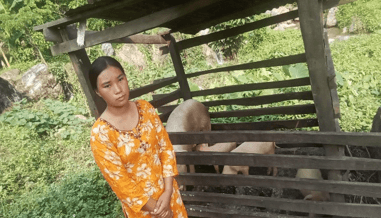
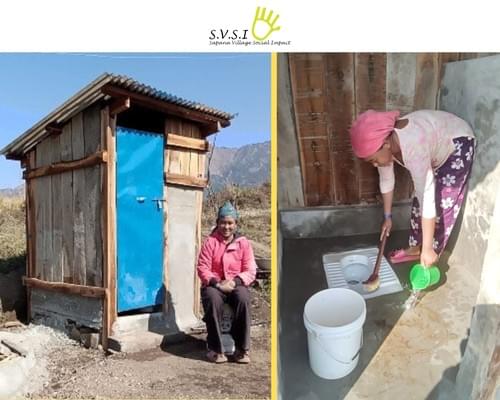
Meet Sajita Chepang from Majbang village, whose family’s life has significantly improved through the Comprehensive Community Development Programme under the WASH sector. Earlier, the family had no access to a safe toilet and was forced to practice open defecation, exposing them to health risks, unsafe conditions, and particular difficulties for women and children.
With support from Sapana Village Social Impact (SVSI), the family received essential construction materials such as cement, zinc sheets, a pan seat, and pipes, along with technical guidance for proper toilet construction. The family also contributed their own labor and locally available resources, ensuring strong community ownership of the project.
Today, they have a safe and durable household toilet, which has greatly improved hygiene, reduced health risks, and restored dignity and safety. Sajita shares her happiness, noting how the new facility has made daily life safer and more comfortable, especially for her children.
From Subsistence Farming to Agripreneurship: Vishnu Kumari Gurung’s Transformation in Ghurkesh
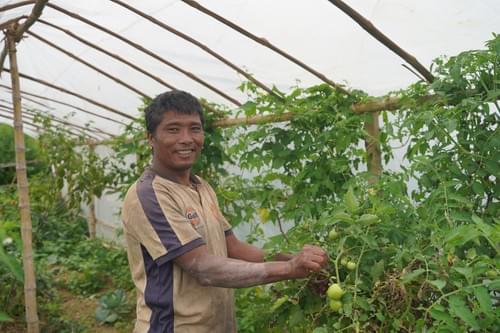
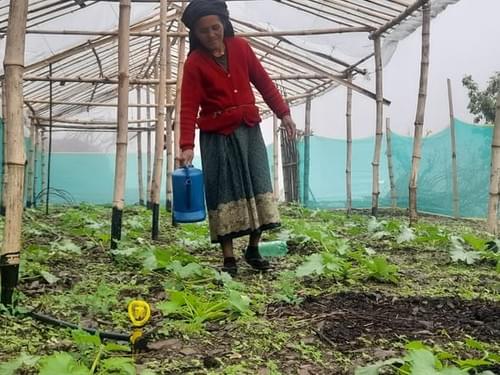
Meet Vishnu Kumari Gurung, a determined farmer from Ichchhakamana RM-2, Ghurkesh, whose life has been transformed through modern agricultural practices. Earlier, she relied on traditional farming methods, cultivating seasonal crops only once a year and producing just enough for household needs, while depending on local markets for vegetables.
Her farming potential remained limited due to a lack of technical knowledge and modern techniques. To address this, Sapana Village Social Impact (SVSI), with support from IRHA, provided a comprehensive agricultural support package including a plastic tunnel, green netting, vegetable production training, Jholmol preparation, Trichoderma culture, and nursery management skills.
As a result, Vishnu is now successfully cultivating crops like zucchini inside her tunnel, with harvest expected within 60–90 days and an estimated yield of around 1 quintal (100 kg). This intervention has enabled year-round farming, improved her family’s income prospects, and turned her into a confident, skilled agripreneur.
Clean Water Brings Relief and Dignity to Byartesh Community, Ichchhakamana–1
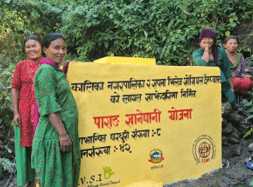
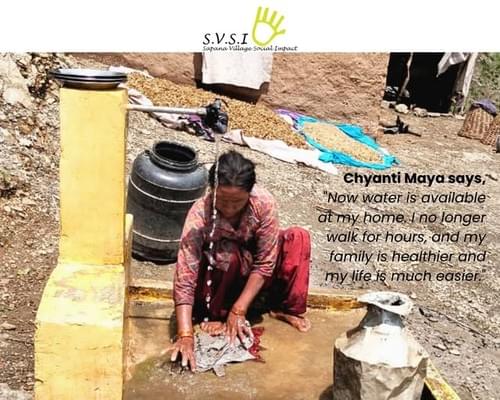
In Byartesh, a remote settlement of Ichchhakamana–1 in Chitwan, Chepang families previously faced severe challenges in accessing safe drinking water. Chyanti Maya Chepang, a mother of five, had to walk over two hours daily to collect water, impacting her health and daily life.
To address this need, Sapana Village Social Impact (SVSI) under the Comprehensive Community Development Program (CCDP), in collaboration with the local community, successfully implemented a drinking water project. The initiative built a water intake system at the source and developed a distribution network connecting eight households through tap water.
Today, families, including Chyanti Maya’s, have access to clean and safe drinking water at their doorstep. This has reduced physical burden, saved time, and improved health, hygiene, and dignity in the community, demonstrating the impact of community-led sustainable development.
Dippal Budhathoki, A Beekeeping Farmer in Kaule
Dippal Budhathoki’s journey into beekeeping is a testament to the transformative impact of targeted interventions. Despite his initial reluctance, his life took a significant turn when SVSI provided essential beekeeping training and two modern beehives in Kaule, Ichhakamana-2, Chitwan. This timely support became a catalyst for change as Mr. Budhathoki soon realized the immense potential of beekeeping as a sustainable livelihood. Motivated by his early success, he independently expanded his operations, adding seven more hives to his initial setup, bringing the total to nine. Today, his enterprise yields an impressive harvest of up to 5 kilograms of honey per hive, utilizing "Apis cerana" bees, a species known for its adaptability to the region.
Emergency Relief to Flood Victims
This year, on last week of September, Nepal received heavy and persistent rainfall. Till now, death toll has reached to 170, with another 63 missing according to National Disaster Risk Reduction and Management Authority. In capital city of Nepal alone, 34 people has lost their lives. Currently, rescue operation is ongoing for which 3000 security personnel are deployed. Since from Friday, all domestic flights out of Kathmandu have been cancelled, affecting more than 150 departures. Chitwan district which is surrounded by the big Narayani River and Rapti river engulfed more territories, affecting daily routine of local people. Many farms land shallowed by the over flooded river; houses inundated. Unforeseen incident that happened recently due to excessive rainfall is a great loss. Till now, SVSI supported 20 HHs in the affected community. For the support, SVSI had coordinated with local government at ward level.
Cookie Use
We use cookies to ensure a smooth browsing experience. By continuing we assume you accept the use of cookies.
Learn More